
EcoTea: Bringing Microbial Diversity Into the Cropping System
Soil is a living environment. Bacteria, fungi and other microorganisms interact with roots, organic materials and minerals, influencing how nutrients are transformed and recycled. A biologically active soil does not rely on one microbe performing one task; many organisms contribute different functions.
EcoTea is a family of microbial products developed around that diversity. Rather than simply supplying plant nutrients, EcoTea products aim to introduce complex microbial communities to the seed environment, root zone or crop residues, depending on the formulation and application.

Why microbial diversity matters
A diverse microbial community contains organisms with different roles in decomposition, nutrient transformations and plant–soil interactions. EcoTea uses a proprietary ecological engineering process to develop broad-spectrum microbial products rather than relying on a single strain as the whole program.
That approach is biologically interesting, but diversity alone does not guarantee establishment or a crop response. Moisture, temperature, nutrient status, competition with native soil organisms and the existing farming system all help determine the outcome.
Beginning at the seed
The region around a germinating seed is a biologically important interface. Emerging roots release compounds that influence microbial activity, while the seedling needs reliable access to water and early nutrients. EcoTea’s liquid and dry seed dressings are designed for this stage of development.

The manufacturer reports research into seed germination, emergence and cold vigour. That makes these products worth evaluating in a short-season environment, but the result in any field depends on the crop, seed lot, conditions and existing seed treatments. A biological dressing does not replace registered disease protection where that protection is required.
Liquid and dry formulations have different application and handling instructions. Compatibility with fungicides, inoculants and other seed products must be evaluated for the specific mixture—not assumed because each product performs well alone.
Root Development: Observations From Our Own Farm
These roots came from our own EcoTea seed-dressing trial in the Peace Country, comparing treated seed with bare seed. I wanted to see what was happening below ground, not just look at the crop from the road. Root development matters because it determines how much soil a young plant can explore for moisture and nutrients.

Our aim is to connect observations like these with emergence, early vigour, soil conditions and harvest outcomes. Documenting the crop, treatment and sampling method makes the photos more useful to other growers.
More from our on-farm seed-dressing comparison. These are the plants we dug to look at rooting and early development, photographed in the field as they came out of the ground.
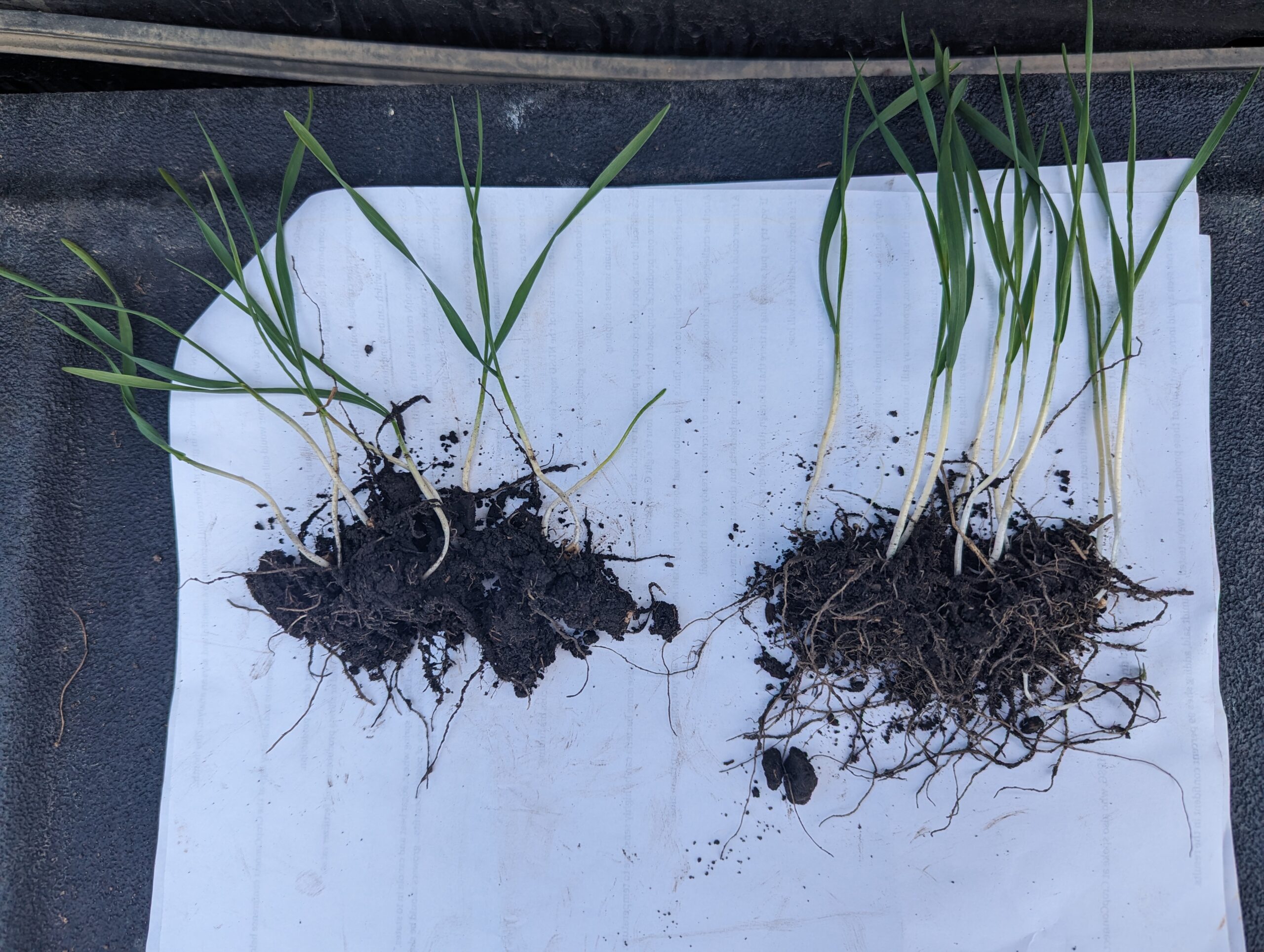
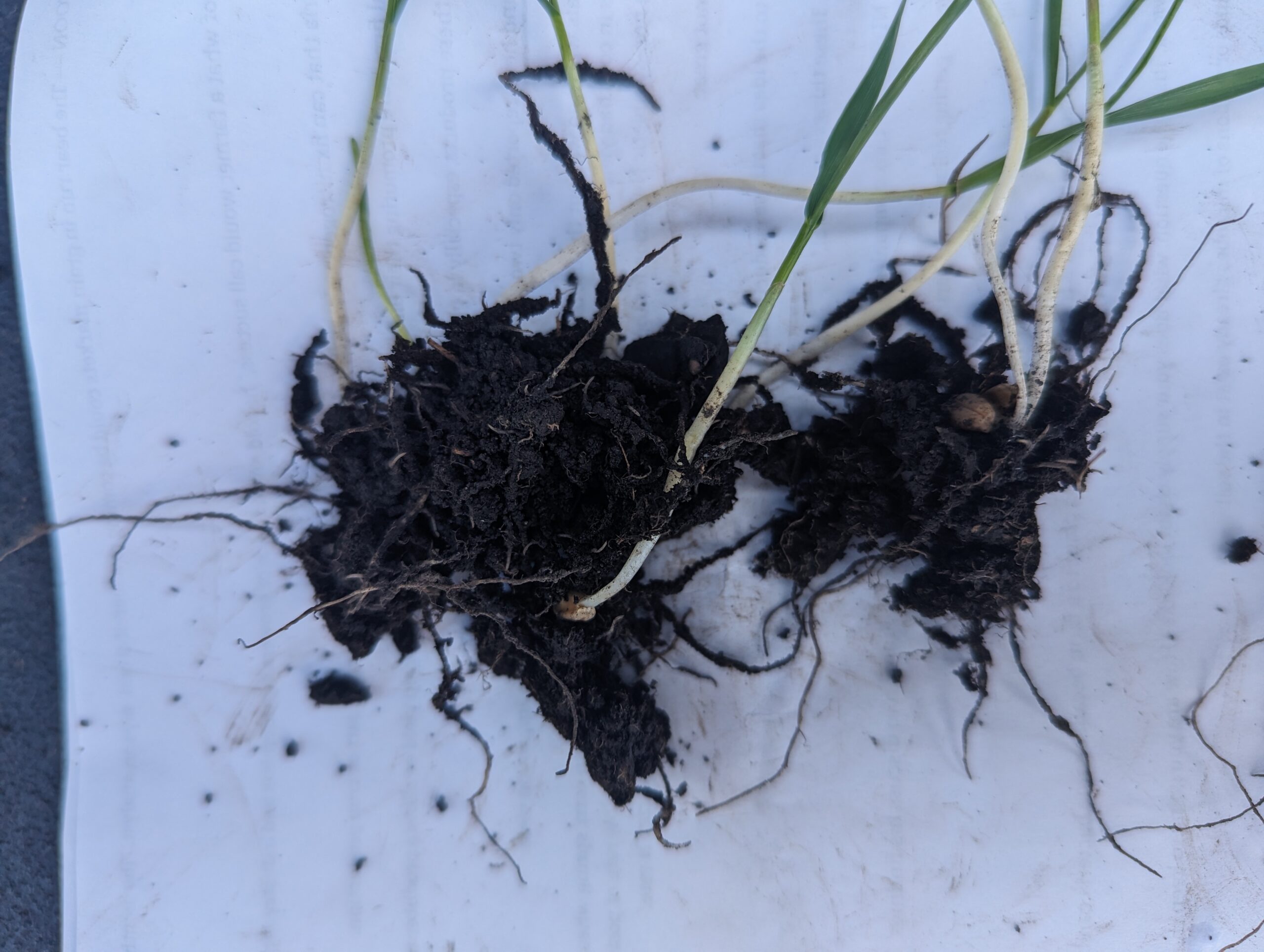
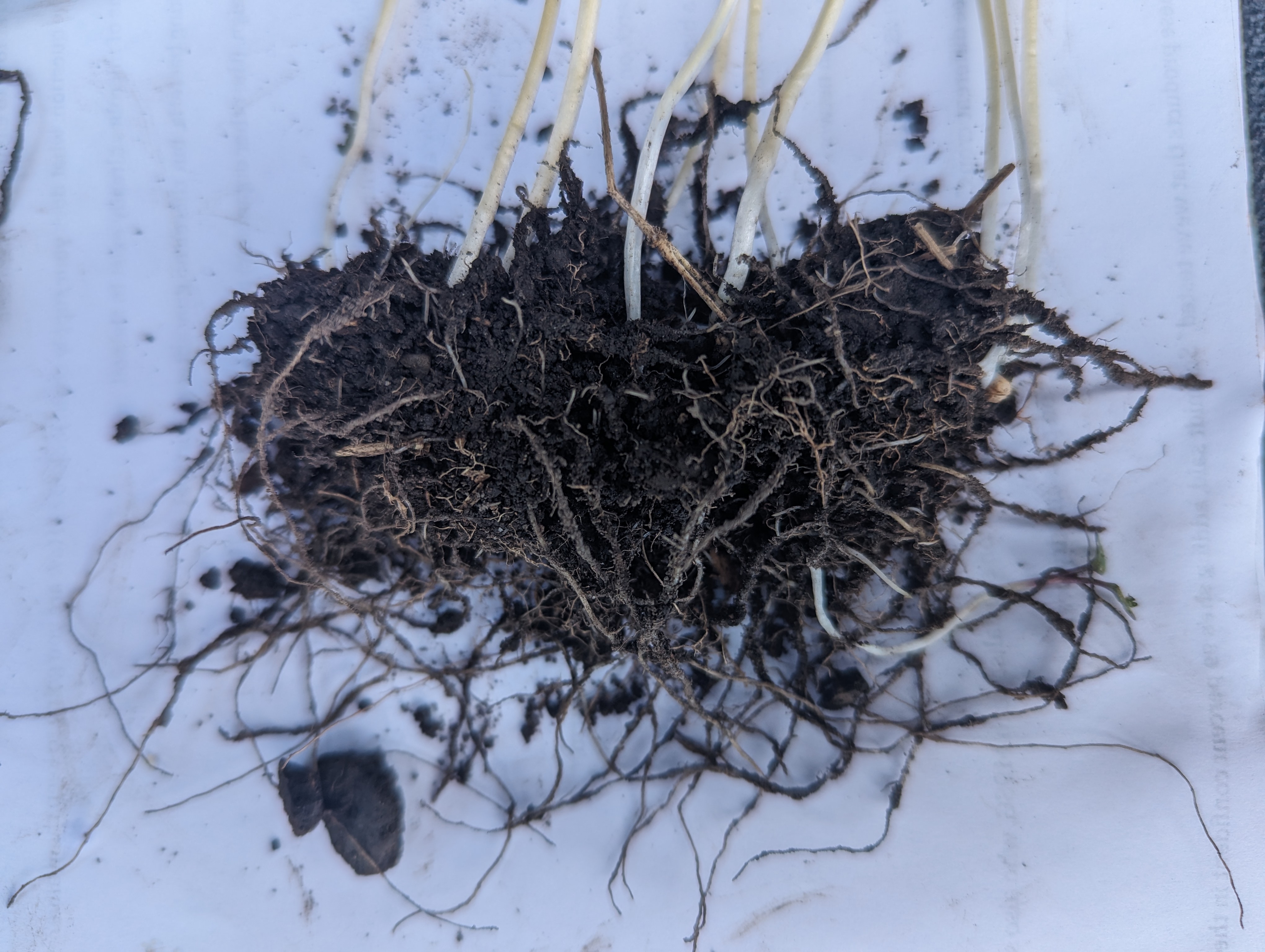
What I find most interesting is how much of a crop’s story is happening below the surface, long before we can measure it at harvest.
Supporting biology around the roots
EcoTea’s High Density Inoculum (HDI) in-furrow and foliar products are designed for application where the crop and its microbiome interact. The aim is to encourage biological processes associated with root function and nutrient cycling within the conditions available.
We pay particular attention to water quality, application equipment, mixing instructions and the time between preparation and application. A living biological product should be managed differently from an inert mineral salt.
Crop residues are part of the fertility cycle
The material left after harvest contains carbon and nutrients that can eventually return to the soil system. Its breakdown depends on residue composition, microbial activity and environmental conditions. Fungi are especially important decomposers of many complex crop-residue compounds, alongside bacteria and other soil organisms.
EcoTea HDI Residue Digester is a separate three-part product built around high-density microbial inoculum, microbial foods and a fungal catalyst. The manufacturer describes it as a residue-focused formulation for spring or fall use. The aim is to encourage decomposition and nutrient recycling rather than treat residue as waste.
The company has published field and plot observations examining residue breakdown and soil nutrient indicators. The observations are useful, but faster residue disappearance is not automatically evidence of additional stable soil organic carbon. Residue management should be assessed for both nutrient cycling and longer-term soil cover.
Read EcoTea’s residue and nutrient-cycling trial summary.
Three Years of Soil Health Research: EcoTea at Discovery Farm
Biological soil management needs to be judged over several growing seasons, not just by the colour of a crop in June. The EcoTea Discovery Farm Soil Health Project at Langham, Saskatchewan followed different biological and fertility programs from 2022 through 2024, tracking chemical, physical and agronomic indicators.
The work compared conventional grower-standard management with a series of programs using EcoTea biological seed and soil applications, together with different fertilizer rates. Across the three seasons, the researchers examined how management affected soil exchange capacity, compaction and water infiltration, as well as crop performance and inputs.
1. Soil Exchange Capacity
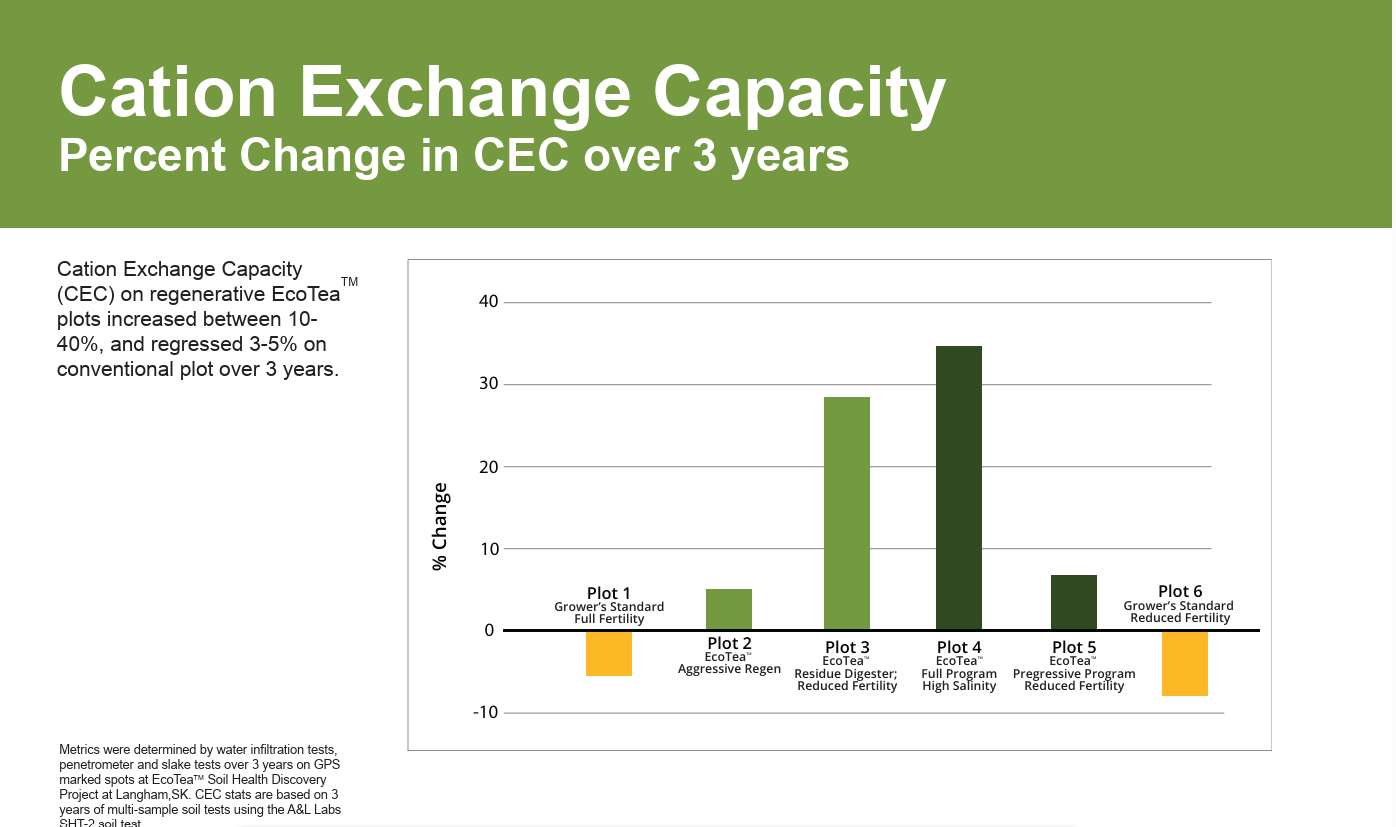
Cation exchange capacity (CEC) describes the soil’s capacity to hold and exchange positively charged nutrients such as calcium, magnesium and potassium. It is influenced by clay, organic matter and soil chemistry. The chart below presents the study’s reported change in exchange capacity over three years. A shift in measured CEC needs to be considered with soil pH, sampling and test method rather than attributed automatically to a single microbial product.
2. Soil Compaction
Root growth, pore continuity, biological aggregation and machinery traffic all influence resistance to penetration. The study tracked changes in compaction across its contrasting management programs. Improved penetration conditions can be meaningful for rooting, but moisture conditions at the time of measurement are an important part of interpretation.

3. Water Infiltration
Water infiltration is a useful indicator of how readily rainfall enters the soil. Soil structure, continuous pores, residue cover and surface sealing all affect it. The study reported changes in water infiltration over the three-year period—an especially relevant measure for farms managing both heavy rain events and prolonged dry spells.

What the study can tell us
This is valuable multi-year field-scale research, with measured observations beyond grain yield. It is also important to recognize the design: the Langham site used non-replicated, no-till treatment strips, and some treatment programs changed both biological inputs and fertilizer rates. It therefore illustrates how complete management approaches performed under those conditions; it does not isolate a universally predictable EcoTea-only effect or establish statistical significance for each chart.
The project included dry crop seasons in 2022 and 2023 and substantially more rainfall in 2024. For us, the most interesting aspect is the attempt to follow soil function, nutrient cycling and crop economics together rather than treating biological products as an isolated yield additive.
Read the EcoTea Discovery Farm research and report downloads, and the project summary at Ag in Motion.
The Peace Country context
Cold soils and short growing seasons can limit the time available for biological transformations. Residue with a high carbon-to-nitrogen ratio may also temporarily compete with crops for available nitrogen as microbes decompose it. Moisture, oxygen and residue distribution all influence the process.
We approach EcoTea as a biological tool within a broader fertility and residue strategy. The goal is not to promise that added microorganisms can overcome poor soil structure, dry conditions or a nutrient shortage on their own.
Matching the product to the biological objective
The EcoTea name covers several distinct products: Liquid Seed Dressing, Dry Seed Dressing, HDI In-Furrow, HDI Foliar and HDI Residue Digester. Each has its own composition, application instructions and Canadian regulatory status. Selecting one should begin with the biological process you want to influence, rather than treating all inoculants as interchangeable.
We favour measured comparisons: emergence and root development for seed treatments, crop and soil indicators for in-season products, and residue condition and nutrient cycling for the digester. Not every biological effect is visible in the first season.
Grower Experience: Organic Oats Near Sexsmith
In 2025, James, an organic oat grower in the Sexsmith area of Alberta, seeded approximately 200 acres of oats. All 200 acres were treated with EcoTea Liquid Seed Dressing. James described exceptional crop performance under very dry growing conditions.
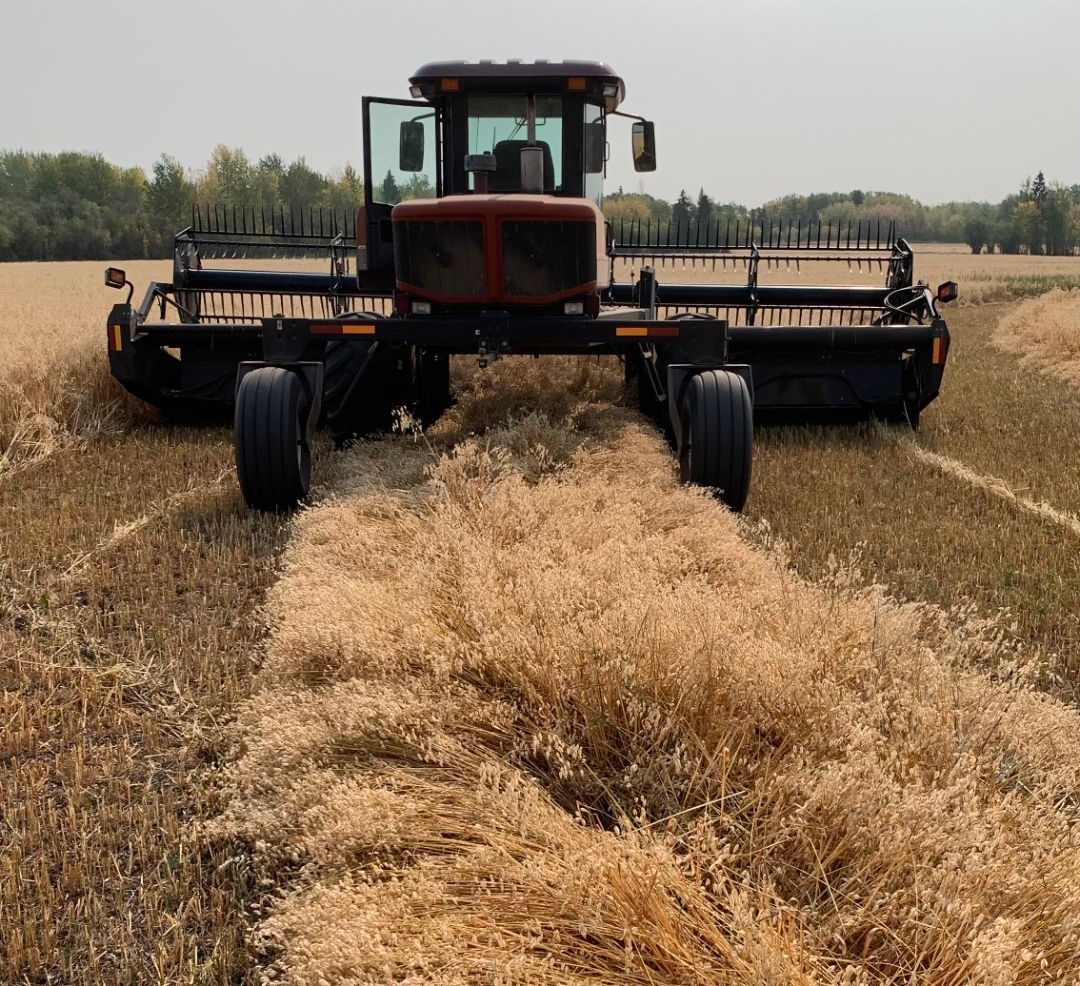
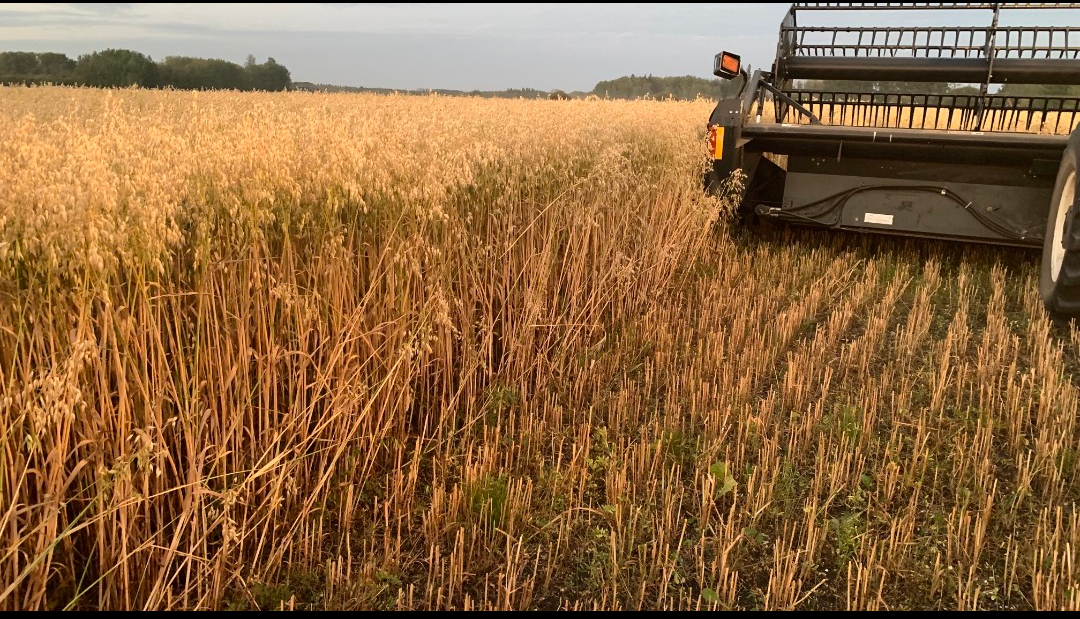
“Best oat crops I’ve ever grown with no rain. One field ran 110 bu/ac, averaging about 80 bu/ac on the 200 acres that I seeded.”
— James, Sexsmith, Alberta | 2025 organic oats, EcoTea Liquid Seed Dressing
Research and product information
EcoTea labels, application rates and safety sheets · EcoTea agriculture research and trial resources · Biostimulants & Seed Treatments overview.
To discuss biological seed treatments or managing crop residues within a soil-health program, contact Peace Soil Works.